Stack Ranking in Performance Management Systems: Benefits, Challenges, and Modern Alternatives

Every organization wants to know who drives results and who doesn’t. Identifying top contributors from average performers sounds simple until you try to do it at scale, under pressure, and without introducing bias. Stack ranking entered the performance management conversation as one direct answer to that challenge.
Decades later, that answer still sparks intense debate. Some organizations swear by it. Others point to documented cultural damage as proof that it should be retired. The truth is more nuanced than either camp admits.
This article covers what stack ranking actually is, how it functions inside modern performance management systems, where it creates real value, and where it consistently fails. It also examines leading alternatives and how performance management software is reshaping the entire conversation.
What Is Stack Ranking in Performance Management Systems?
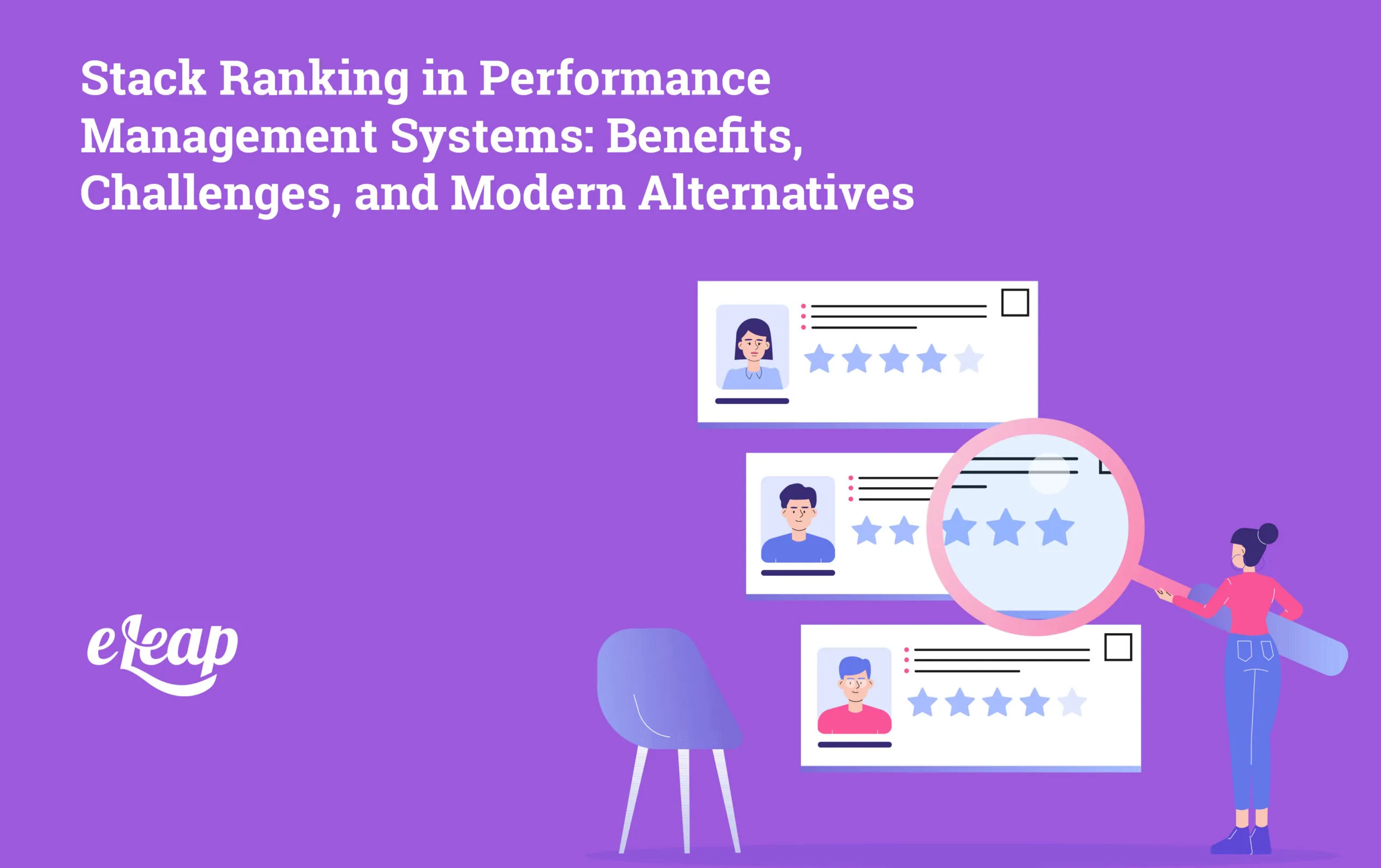
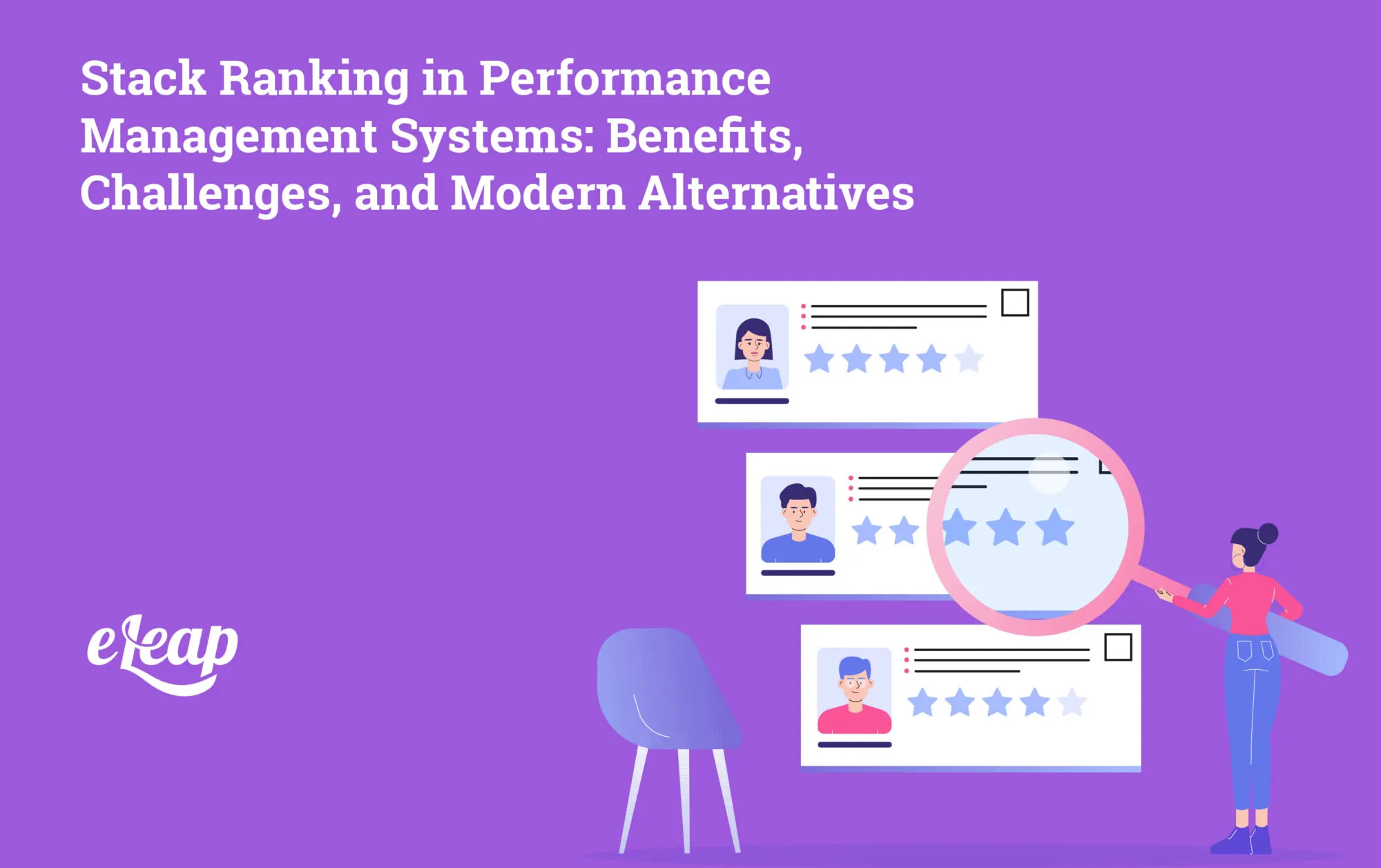
Stack ranking is a forced ranking method. Managers evaluate all employees and sort them into performance tiers based on their standing relative to peers not against a fixed standard or benchmark.
The most widely recognized model is the 20-70-10 distribution: the top 20% are designated high performers, the middle 70% are solid contributors, and the bottom 10% are typically placed on performance improvement plans or exited. General Electric popularized this model under Jack Welch during the 1980s and 1990s.
Stack ranking sits inside broader performance management systems as a differentiation tool. It forces managers to make hard distinctions between employees rather than clustering everyone around “meets expectations.” The intent is to surface talent clearly and eliminate ambiguity from evaluations.
In practice, this creates real tension. Not every team distributes performance on a perfect bell curve. A team of seven high performers still must produce a bottom 10%. Forced ranking performance management can penalize strong employees simply because someone on their team ranked higher.
How Stack Ranking Works in Performance Management Software
Manual stack ranking was slow and highly vulnerable to manager bias. Modern performance management software has transformed that workflow significantly.
Today’s platforms collect performance data continuously. They pull from KPIs, OKRs, project completions, 360-degree feedback, and attendance records. The system aggregates that data automatically, so managers no longer rely on memory or gut instinct when evaluation time arrives.
A typical stack ranking workflow inside software operates through five stages:
- Data Collection The system tracks KPI completion rates, goal progress, and real-time feedback. Every interaction leaves a documented data trail.
- Automated Ranking Algorithms The software scores employees based on weighted metrics and generates a ranked list across departments or teams.
- Visual Dashboards HR leaders view ranking distributions through interactive dashboards that surface outliers quickly.
- Reporting and Insights The platform generates automated reports that support compensation reviews, promotions, and succession planning decisions.
- HR System Integration Most platforms connect with payroll, HRIS, and L&D tools, creating one unified employee performance record across the organization.
The transition from spreadsheets to dedicated software solved many legacy problems. Data-driven insights replaced subjective manager opinions. Real-time performance tracking made evaluations more accurate. The entire process became faster and more legally defensible.
Key Advantages of Stack Ranking in Performance Management Systems
Stack ranking has survived decades of criticism because it delivers real benefits in the right context. Clear Performance Differentiation. The method forces organizations to identify their best and weakest performers. There is no room for vague ratings or middle-of-the-road evaluations. Every employee receives an explicit standing relative to peers.
Better Talent Management Decisions Leaders direct bonuses, promotions, and training toward high performers with greater confidence. Resources flow toward employees who generate the most business value rather than spreading thinly across the organization.
Accountability at Every Level. Employees who know they are evaluated against peers often improve their performance naturally. The visibility of ranking creates a direct incentive to improve rather than coast.
Productivity in Competitive Environments: Sales teams and revenue-driven departments frequently thrive under stack ranking. Quantifiable KPIs make comparisons straightforward, and healthy competition can accelerate results.
Deloitte research has consistently shown that organizations with strong performance differentiation outperform competitors, retain top talent more effectively, and execute strategic decisions faster. Gallup data also confirms that employees who receive clear, specific performance feedback report higher engagement levels. Stack ranking, executed well, provides that clarity.
Major Disadvantages and Criticism of Stack Ranking
The backlash against stack ranking is well-documented and grounded in real organizational outcomes.
Forced Competition Harms Collaboration When employees rank against each other, sharing knowledge becomes a competitive risk. Helping a colleague who might outrank you runs counter to individual self-interest. This dynamic quietly dismantles team cohesion and psychological safety over time.
Employee Disengagement: Workers who land in the middle tier often lose motivation. Being labeled “average” year after year erodes ambition even among employees who are genuinely strong performers in absolute terms. High performers also grow anxious about defending their rank rather than focusing on meaningful work.
High Voluntary Turnover Companies using aggressive stack ranking frequently lose talented employees who leave rather than compete in a culture they find arbitrary or unfair. The very people organizations most want to retain often have the most options to exit.
Systemic Bias Risk Ranking still relies heavily on manager judgment, even when data supports the process. Personal affinity, visibility, and proximity all influence final rankings. Remote workers and introverted employees frequently rank lower because they are less visible not because they perform worse.
Microsoft’s experience stands as a widely cited cautionary example. The company used stack ranking aggressively for years. Employees reported gaming the system, avoiding collaboration, and steering clear of innovative but risky projects that might hurt their rank. Microsoft abandoned the practice in 2013. The cultural shift that followed led to measurable improvements in collaboration, product quality, and employee satisfaction.
Real-World Examples of Stack Ranking in Organizations
General Electric and Large-Scale Talent Differentiation: GE made the 20-70-10 ranking model famous at an enterprise scale. The system helped identify leadership candidates across a massive organization. Top performers moved into accelerated development tracks. The bottom 10% faced annual exit conversations. GE posted strong financial results during Welch’s tenure, though critics consistently argued the method sacrificed long-term employee trust for short-term performance gains.
Microsoft and the Innovation Problem Microsoft’s stack ranking story reveals a specific structural flaw: the method penalizes calculated risk-taking. Engineers avoided working on uncertain or innovative projects because failure might drop their ranking. Safe, incremental work became the rational choice. After abandoning forced ranking performance management in 2013, Microsoft’s internal culture opened considerably. Products improved. Collaboration increased. The lesson rigid ranking systems punish the creative risk-taking that drives innovation.
Sales Teams and Measurable KPIs. Stack ranking works most reliably when performance is fully quantifiable. Sales environments offer precisely that revenue closed, deals won, pipeline generated, and call volume tracked. Ranking sales representatives against each other drives healthy competition, motivates top performers, and gives managers clear data for coaching conversations. Many sales organizations continue using this model effectively today.
Stack Ranking vs. Modern Performance Management Approaches
The HR industry has moved steadily toward more flexible, human-centered evaluation models. Stack ranking occupies one end of a broader spectrum.
| Feature | Stack Ranking | Continuous Feedback | 360-Degree Feedback | OKRs |
| Frequency | Annual/Semi-annual | Ongoing | Quarterly/Annual | Quarterly |
| Focus | Relative comparison | Individual growth | Multi-source input | Goal alignment |
| Employee Impact | High stress, competition | Supportive, developmental | Balanced, comprehensive | Purpose-driven |
| Collaboration | Often damaged | Encouraged | Encouraged | Team-oriented |
| Data Use | Limited | Rich, real-time | Rich, multi-source | Outcome-based |
| Best Fit | Sales, large orgs | All teams | Leadership roles | Agile teams |
Continuous performance management replaces annual reviews with regular check-ins. Managers provide real-time coaching, and employees course-correct faster. Year-end surprises drop significantly when feedback flows throughout the year.
360-degree feedback gathers input from peers, direct reports, and managers simultaneously. It eliminates single-point bias and gives employees a fuller picture of how their work lands across the organization.
OKRs align individual goals directly with company strategy. Teams work toward shared outcomes, which makes individual ranking less relevant when everyone pulls in the same direction.
None of these alternatives to stack ranking eliminates accountability. They reframe it around growth and contribution rather than survival and displacement.
How Performance Management Software Improves Stack Ranking
Technology does not eliminate the problems inherent in stack ranking. But it reduces many of its worst flaws significantly when implemented well.
Bias Reduction Through Data Software grounds rankings in objective metrics. Managers cannot rank someone low simply because they are less visible or less personally familiar. Data tells the operational story more accurately than memory does.
Real-Time Performance Tracking Evaluations no longer depend on recollections of what happened six months ago. The system tracks performance continuously, so rankings reflect current reality rather than outdated impressions from a single high-profile project or failure.
Predictive Analytics Advanced platforms flag employees at risk of disengagement before that risk becomes turnover. HR teams can intervene early with targeted development support rather than reacting after a resignation arrives.
Enhanced Transparency Employees who can see their performance data and understand how their ranking was generated report less resentment and greater trust in the process. Transparency converts ranking from a verdict into a conversation.
Automated Feedback Systems Software prompts managers to provide regular feedback between formal evaluation cycles. This closes the gap that made traditional annual rankings feel arbitrary and disconnected from day-to-day work.
eLeaP performance management software brings these capabilities together on one platform. It supports both structured ranking and ongoing feedback, giving HR teams visibility across departments without requiring extensive manual data work.
Best Practices for Implementing Stack Ranking Successfully
Stack ranking fails most often because organizations implement it carelessly or apply it to contexts where it doesn’t fit. These practices reduce that risk considerably.
Define Clear Performance Criteria First. Every employee must understand what metrics drive their ranking before any evaluation begins. Ambiguous criteria create resentment and outcomes that managers cannot defend. Define KPIs and OKRs before the ranking process opens.
Use Data-Driven Evaluation Methods: Rely on measurable performance data rather than personality assessments or manager preference. Performance management software standardizes evaluation inputs across the organization and reduces the influence of personal bias.
Train Managers Effectively. Managers must understand how to rank fairly and how to communicate rankings constructively. Bias awareness training is not optional poorly trained managers undermine even the best-designed system. The tool is only as good as the person using it.
Combine Stack Ranking with Continuous Feedback. Annual rankings should never surprise employees. Pair ranking with ongoing coaching conversations so that employees understand their standing throughout the year. A rank at year-end should confirm a trajectory employees already recognize, not introduce one.
Leverage Performance Management Software. Manual processes introduce inconsistency and expose organizations to legal risk. Software automates data collection, generates defensible rankings, and keeps documentation organized for compliance and audit purposes.
Organizations that follow these steps report better adoption rates and stronger employee trust in the process.
When to Use (and Avoid) Stack Ranking
Stack ranking is not a universal solution. Context determines whether it creates value or destroys it.
Stack Ranking Works Well In:
- Sales-driven environments with clear, quantifiable KPIs
- Large organizations managing hundreds or thousands of employees
- Companies undergoing rapid growth that need fast talent differentiation
- Industries with competitive compensation structures tied directly to individual output
Stack Ranking Will Likely Fail In:
- Creative or innovation-focused teams where output is difficult to measure objectively
- Small teams where ranking five people creates more friction than clarity
- Collaborative cultures where shared outcomes matter more than individual scores
- Organizations are already struggling with trust, psychological safety, and retention
Forcing stack ranking onto a collaborative, purpose-driven team is a recipe for cultural damage. The method suits environments where individual output is clear, measurable, and relatively independent. Outside those boundaries, it consistently creates more problems than it solves.
eLeaP helps HR leaders assess which performance management system fits their team dynamics. The platform supports multiple evaluation frameworks, so organizations can choose the approach that aligns with their culture and strategic goals.
The Future of Stack Ranking in Performance Management Systems
Stack ranking is not disappearing. But its role is shifting considerably.
The future belongs to hybrid performance management models. Organizations combine ranking with continuous feedback, OKRs, and AI-driven insights rather than relying on any single method. The goal is to pick the tools that fit each team’s context and evolve that mix as the organization changes.
Integration with Continuous Feedback Systems. Future platforms will blend ranking with real-time coaching automatically. Employees receive development guidance without waiting for a once-a-year review conversation.
Personalized Performance Insights AI will generate individualized development recommendations tied to each employee’s ranking data. Ranking shifts from a judgment tool to a growth planning instrument one that identifies where development investment will have the highest impact.
The evolution of Performance Management Software Platforms is becoming more predictive and less retrospective. They identify future potential rather than cataloging past performance alone. This shift changes how organizations think about ranking entirely from a sorting mechanism to a talent development signal.
HR technology research from Gartner and Josh Bersin’s analyst work both point to the same trend. Employee experience drives performance strategy. Organizations that treat ranking as a punitive tool will lose talent to competitors who take more human-centered approaches to the same challenge.
The stack ranking system of the future looks very different from Jack Welch’s original model. It combines the clarity of performance differentiation with the empathy of continuous development. Modern performance management software makes that balance achievable at scale.
Conclusion
Stack ranking carries a complicated legacy. It delivers clarity and drives accountability in the right environment. It also breeds unhealthy competition, bias, and disengagement when misapplied or used in isolation.
The method works best as one component inside a larger performance management system not as the entire system. Organizations that pair ranking with continuous feedback, well-defined KPIs, and strong manager training consistently see better outcomes than those that rely on ranking alone.
Performance management software transforms how stack ranking operates in practice. It removes subjectivity, adds transparency, and connects employee performance ranking data to real business decisions. The future of performance management is not a choice between ranking and development. It is about using both intelligently and adjusting the balance as organizational needs evolve.
Leaders who embrace that flexibility will build teams that are both high-performing and deeply engaged and that combination remains the most durable competitive advantage any organization can develop.
FAQ
What is stack ranking in performance management?
Stack ranking is a forced ranking method in which managers evaluate all employees and sort them into performance tiers typically top, middle, and bottom percentages. It measures employees against each other rather than against a fixed standard.
Is stack ranking still used today?
Yes, though its use has declined among large enterprises. Many companies abandoned strict forced ranking models after documenting cultural damage. Others use modified versions combined with continuous feedback and data-driven performance management software.
What are the main alternatives to stack ranking?
The most widely adopted alternatives include continuous performance management, 360-degree feedback, and OKRs. Each method addresses specific limitations of traditional forced ranking approaches.
How does performance management software improve stack ranking?
Software reduces bias by grounding rankings in objective, real-time data. It automates reporting, enables continuous tracking, and increases transparency. Rankings become more accurate, consistent, and defensible and employees have greater visibility into how their standing is determined.
When does stack ranking fail?
Stack ranking consistently fails in collaborative, innovation-focused, or small-team environments where individual output is difficult to measure independently. It also fails when managers lack bias awareness training or when the process operates without ongoing feedback and clear performance criteria.